Burnout, Confidence, and Communication: A Trauma-Informed Perspective for Leaders
Burnout doesn’t just drain energy—it quietly drains confidence. Many high-performing leaders and professionals describe the same experience: “I still care, but I don’t feel like myself.” They second-guess decisions, avoid hard conversations, or over-function to compensate. From a trauma-informed lens, this isn’t a motivation issue. It’s often nervous system dysregulation from chronic workplace stress.
When the nervous system shifts from safety into survival, the brain prioritizes threat detection over empathy, curiosity, and collaborative problem-solving. That shift changes communication. A leader who is normally grounded may become abrupt, defensive, overly controlling, or emotionally distant—often without realizing it. Teams feel these cues immediately. When communication signals threat, psychological safety drops, and people protect themselves: they stay quiet, disengage, or comply without commitment. Over time, trust erodes, conflict rises, and workplace burnout deepens.
Here’s the link many organizations miss: confidence at work is state-dependent. When you’re dysregulated, your internal narrative changes. You’re more likely to interpret feedback as criticism, mistakes as failure, or uncertainty as danger. This is why burnout can look like imposter syndrome, perfectionism, people-pleasing, or avoidance. You don’t lose your competence—you lose access to the regulated state where your competence shows up best.
Trauma-informed leadership starts with a practical reframe: Regulation first. Communication second. Traditional communication training focuses on scripts and techniques, but under stress those higher-order skills can go offline. Leaders who build regulation capacity communicate with steadiness—even in conflict. They pause before responding, listen without defensiveness, repair missteps faster, and model calm in uncertainty. Those behaviors don’t just improve conversations—they rebuild emotional safety, which is essential for burnout recovery and restored confidence.
What you can do today (in 3 minutes)
Before your next difficult conversation, try this quick “confidence reset”:
Pause and exhale longer than you inhale (signals safety to the body).
Ground your body (feel your feet, relax shoulders, unclench jaw).
Ask: “What state am I bringing into this conversation?”
That one question can interrupt reactivity and restore choice.
Burnout recovery isn’t only about time off. It’s about rebuilding nervous system capacity, emotional safety, and confidence—so you can lead, communicate, and make decisions from a place of steadiness again. When leaders regulate, teams re-engage. And when safety returns, confidence returns too.
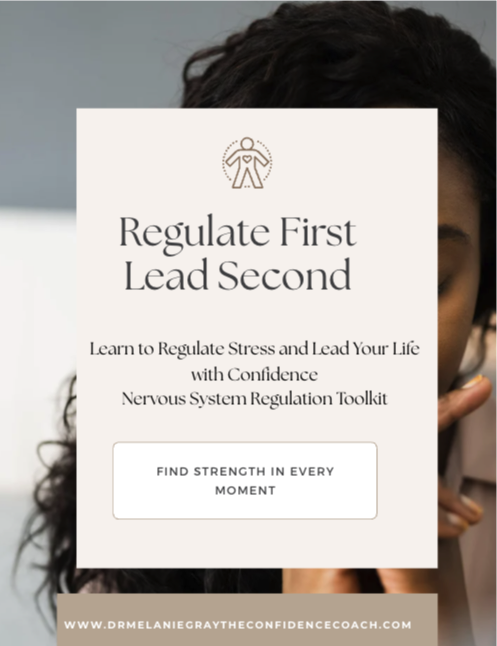
Free Toolkit Regulate First Lead Second